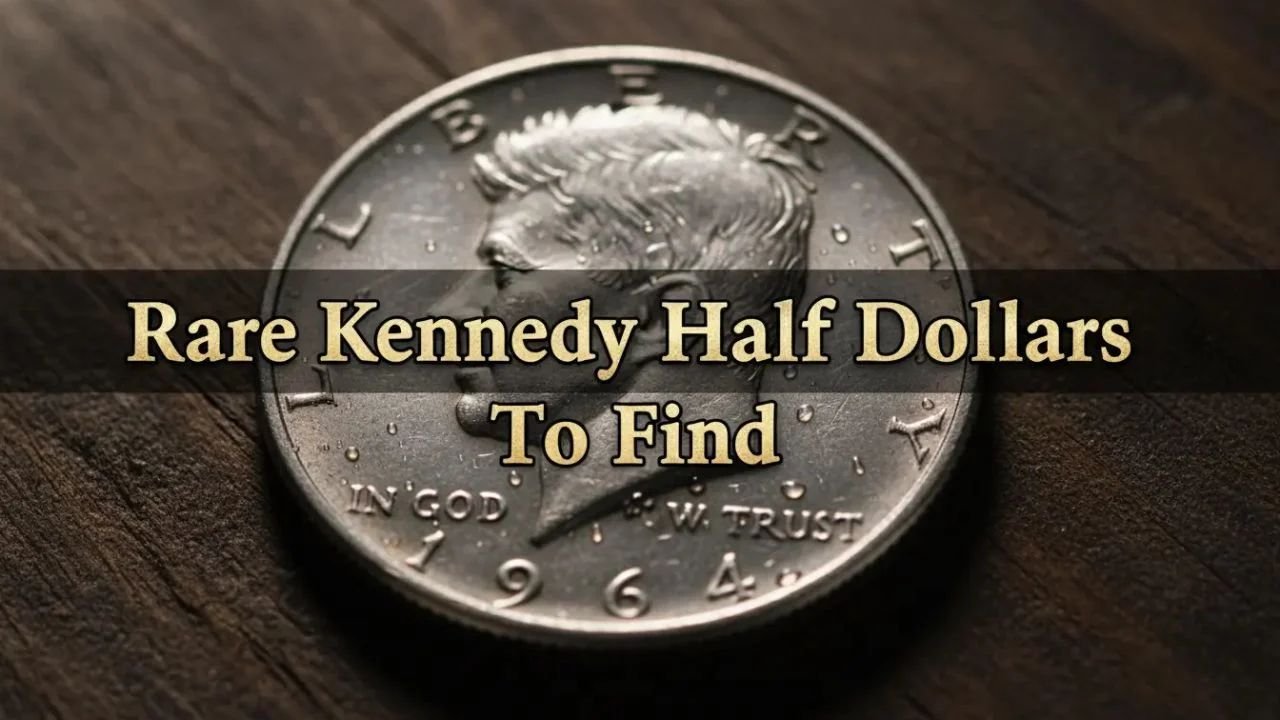
The Kennedy Half Dollar occupies a special place in American coinage. Introduced in 1964 to honor President John F. Kennedy, the coin quickly became more than just currency. It became a symbol of history, national sentiment, and enduring collector interest. Over the decades, certain Kennedy Half Dollars have emerged as standout rarities, prized for their silver content, unusual minting characteristics, and exceptional condition.
For collectors and investors alike, understanding which Kennedy Half Dollars truly matter can make the difference between an ordinary coin and a meaningful discovery. This guide explores the eleven Kennedy Half Dollar varieties that collectors most hope to encounter, along with practical insight into why they matter and how to identify them.
How to Use This Guide Effectively

When evaluating a Kennedy Half Dollar, focus on three fundamentals: condition, mint origin, and unusual characteristics. Coins with sharp detail, minimal wear, and strong eye appeal consistently outperform average examples. Mint marks, die varieties, and minting errors often elevate value dramatically, especially when verified by professional grading services.
Always handle coins carefully, store them properly, and compare your findings with certified reference images before drawing conclusions.
The 11 Rare Kennedy Half Dollars Collectors Dream of Finding
1. 1964 First-Year 90% Silver Kennedy Half Dollar
The original 1964 Kennedy Half Dollar is struck in 90% silver and remains the foundation of the series. These coins were heavily saved by the public, yet examples with crisp strikes and untouched surfaces remain highly desirable. High Mint State specimens, especially those with strong hair detail and bold reverse feathers, command significant premiums.
2. 1964 Doubled Die Obverse Varieties

True doubled die obverse errors from 1964 are among the most sought-after Kennedy Half Dollars. These coins show clear doubling on the date, lettering, or Kennedy’s profile, caused during the die creation process rather than post-strike damage. Strong examples are scarce and widely collected, making them a cornerstone variety for error specialists.
3. Repunched Mint Marks from Early Denver Issues
Before mint marks were added directly to coin dies, they were punched by hand, creating opportunities for misalignment. Repunched mint marks, especially early Denver examples, display visible overlapping or offset impressions. When clearly defined and authenticated, these varieties attract both variety collectors and traditional Kennedy enthusiasts.
4. Proof Coins with Cameo and Deep Cameo Contrast
Proof Kennedy Half Dollars with pronounced cameo or deep cameo contrast are prized for their visual impact. Frosted design elements against mirror-like fields create striking presentation, particularly in higher grades. These coins are most valuable when the contrast is bold on both obverse and reverse surfaces.
5. Special Mint Set Kennedy Half Dollars
Special Mint Sets produced during the mid-1960s occupy a unique niche. These coins feature superior surface quality compared to circulation strikes but lack the mirrored fields of proofs. Kennedy Half Dollars from Special Mint Sets, especially in exceptional condition, are highly collectible due to their limited production and distinctive appearance.
6. Transition-Era Silver and Clad Errors
The mid-1960s marked the transition from silver to copper-nickel clad coinage. During this period, rare Kennedy Half Dollars were struck on incorrect planchets or with experimental compositions. These coins often reveal themselves through unusual weight, color, or edge characteristics and can command substantial prices when authenticated.
7. Bicentennial Kennedy Half Dollars in Silver and Proof Formats
The 1975–1976 Bicentennial Kennedy Half Dollars feature a dual-date design and were produced in both circulation and silver versions. Silver proofs and uncirculated silver issues are particularly popular, especially when preserved in original condition. Their historical theme and limited silver production make them enduring collector favorites.
8. Modern Silver Proof and Limited-Issue Releases
From the 1990s onward, the U.S. Mint produced select Kennedy Half Dollars in silver proof and special collector formats. Low-mintage issues, pristine examples, and coins retained in original packaging continue to see strong demand. These modern releases combine collectability with precious metal appeal.
9. Dramatic Striking Errors
Striking errors such as off-center strikes, clipped planchets, and significant die breaks add visual intrigue and rarity. Kennedy Half Dollars with bold, unmistakable errors are especially attractive to collectors when the date and design remain clearly visible. Proper documentation and professional authentication are essential for maximizing value.
10. Cataloged Doubled Dies and Die Varieties
Beyond the well-known doubled dies, numerous subtle die varieties exist throughout the Kennedy series. Some feature minor design shifts, distinctive die markers, or small but recognizable anomalies. Coins listed in recognized variety catalogs often gain value as collector awareness increases.
11. Museum-Grade and Provenance-Backed Examples
Kennedy Half Dollars with exceptional grades or notable provenance stand at the top of the market. Coins linked to prominent collections, special mint experiments, or record-setting auction sales carry prestige alongside rarity. These pieces often define benchmark prices for the series.
Practical Tips for Identifying and Valuing Rare Kennedy Half Dollars
Examine coins under strong lighting with a quality magnifying loupe. Small details often separate ordinary pieces from valuable varieties.
Pay close attention to weight and diameter when suspecting composition errors. Compare questionable coins against verified reference images from trusted grading services.
For any coin with potential high value, professional grading from established services such as PCGS or NGC provides authentication, protection, and market credibility.
A Real-World Discovery Scenario
A collector once acquired a group of circulated Kennedy Half Dollars at a modest price. Among them was a sharply struck 1964 example with minimal wear. After professional grading confirmed a high Mint State designation, the coin sold at auction for several times the original investment. This type of discovery underscores the importance of careful inspection and informed decision-making.
Final Checklist Before Buying or Selling
Verify mint marks and known die varieties using magnification.
Confirm originality and authenticity, especially for proofs and special issues.
Estimate condition conservatively unless professionally graded.
Review recent auction results to understand current market demand.
Conclusion: Why Kennedy Half Dollars Continue to Inspire Collectors
The appeal of the Kennedy Half Dollar lies in its blend of history, design, and opportunity. From silver-rich early issues to dramatic minting errors and elite-grade rarities, the series offers something for every level of collector. With patience, knowledge, and attention to detail, remarkable finds remain possible. For those willing to look closely, the Kennedy Half Dollar continues to reward curiosity and dedication.