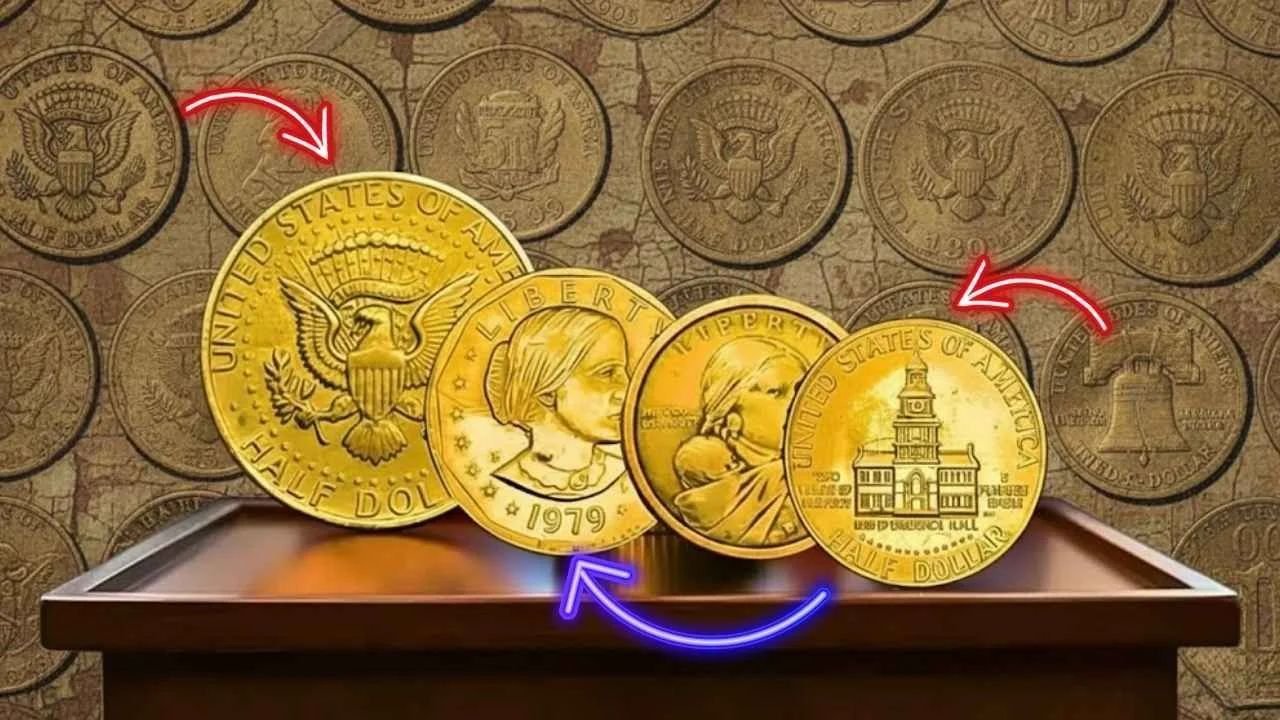
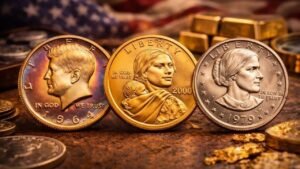
Coin collecting in 2026 looks very different from the traditional image of dusty albums and century-old relics. Modern U.S. dollar coins—many still remembered from everyday use—are now capturing global attention for their extraordinary market potential. Rare Kennedy Half Dollars, Sacagawea Dollars, and Susan B. Anthony Dollars have proven that modern coinage can achieve six- and even seven-figure valuations when rarity, condition, and history converge.
This shift is redefining how collectors and investors view modern American coins.
Why Modern U.S. Dollar Coins Are Reaching Million-Dollar Status
For decades, serious collectors focused almost exclusively on early American coinage, believing modern issues lacked genuine scarcity. That assumption has been overturned. Limited-production mint sets, experimental strikes, transitional errors, and overlooked varieties have created extreme rarity within otherwise common series.
What makes these coins especially compelling is their familiarity. Unlike ancient or early U.S. coins, many modern dollar coins were produced in large quantities and circulated widely. Rare versions may still exist in private collections, inherited holdings, or forgotten storage boxes. This combination of accessibility and hidden scarcity has fueled intense collector demand in 2026.
Professional grading and transparent auction records have further legitimized modern coins as high-end assets, attracting affluent collectors and alternative-asset investors.
The Kennedy Half Dollar: Silver, History, and Elite Rarity
Introduced in 1964 following the assassination of President John F. Kennedy, the Kennedy Half Dollar holds deep emotional and historical significance. Early issues were struck in 90 percent silver, prompting widespread hoarding and long-term preservation.
Among the most desirable examples are high-grade 1964 proof coins with distinctive die characteristics. These proofs combine historical importance, precious metal content, and exceptional craftsmanship. Another standout is the 1970-D Kennedy Half Dollar, which was never released into circulation and appeared only in limited mint sets. High-grade examples are extremely scarce and increasingly competitive at auction.
In rare instances involving experimental strikes or dramatic mint errors, Kennedy Half Dollars have been associated with valuations approaching or surpassing the million-dollar mark. These coins represent the pinnacle of modern U.S. numismatics, appealing to collectors who value both cultural legacy and tangible rarity.
Sacagawea Dollar: From Modern Coin to Investment-Grade Rarity
The Sacagawea Dollar debuted in 2000 as part of an effort to modernize U.S. currency. Featuring Sacagawea, the Shoshone woman who guided the Lewis and Clark expedition, the coin symbolized exploration and inclusion. For years, the series was largely ignored by serious collectors.
That perception changed dramatically with the discovery of rare early varieties. The most famous is the Cheerios Sacagawea Dollar, distributed through a promotional campaign before the final reverse design was standardized. This version features enhanced eagle tail feather details that clearly distinguish it from regular issues.
Because only a small number entered circulation, surviving examples are exceptionally rare. High-grade specimens have achieved prices well into the six figures, with elite examples approaching seven-figure territory.
Additional value drivers include Sacagawea Dollars struck on unusual planchets, creating weight and composition anomalies. These error coins are highly prized, particularly when certified in pristine condition. Together, these discoveries have transformed the Sacagawea Dollar into one of the most exciting modern U.S. coin series.
Susan B. Anthony Dollar: The Power of Overlooked Rarity
When the Susan B. Anthony Dollar was introduced in 1979, it struggled with public acceptance. Its size and color closely resembled the quarter, causing confusion in circulation. As a result, the series was short-lived and often dismissed by collectors for years.
Ironically, that lack of popularity helped create scarcity. Certain varieties now rank among the most intriguing modern U.S. dollar coins. The 1979-P Wide Rim variety is a prime example. Subtle differences in the rim’s width distinguish it from standard strikes, yet these details are easy to overlook without careful inspection.
Another standout is the 1981 Susan B. Anthony Dollar, especially proof issues produced exclusively for collectors. These coins were never released into circulation, and high-grade examples are increasingly difficult to find.
As collector interest has shifted toward overlooked modern issues, top-condition Susan B. Anthony Dollars have seen strong auction performance, reinforcing the idea that rarity can emerge where few once looked.
What Drives Million-Dollar Prices in Modern Coins
Extreme valuations in modern U.S. dollar coins are not random. They are driven by a precise combination of factors.
Scarcity is paramount. Coins with documented low populations, experimental origins, or confirmed errors attract intense competition. Condition is equally critical. Professional grading at the highest levels can multiply a coin’s value dramatically.
Collector psychology also plays a role. Coins tied to major historical figures, cultural milestones, or pivotal moments in U.S. coinage carry emotional significance that enhances demand. When multiple high-end collectors pursue the same rare coin, prices can escalate rapidly.
The Ongoing Thrill of Discovery
One of the most compelling aspects of modern coin collecting is the possibility of discovery. Unlike ancient rarities locked away in museums, modern dollar coins still appear in estates, private collections, and long-forgotten storage.
The idea that a seemingly ordinary coin could be worth hundreds of thousands—or more—continues to attract new collectors in 2026. Online communities, educational platforms, and competitive auctions have amplified this excitement, encouraging people to examine coins more closely than ever before.
Preserving and Protecting High-Value Coins
Preservation is essential once a potentially valuable coin is identified. Coins should be handled only by their edges and stored in archival-quality holders that protect against moisture, air, and physical damage. Cleaning coins, even gently, can permanently reduce their value.
Professional authentication and grading remain critical for coins with serious value potential. Certified coins command higher prices and offer confidence to buyers, sellers, and auction houses alike.
Final Perspective
The Kennedy Half Dollar, Sacagawea Dollar, and Susan B. Anthony Dollar demonstrate that modern U.S. dollar coins can achieve extraordinary value when rarity, history, and condition align. In 2026, collectors increasingly recognize that million-dollar treasures are not limited to the distant past.
With careful observation, proper preservation, and a solid understanding of rare varieties, modern coins once considered ordinary can become remarkable financial and historical assets, reshaping the future of American numismatics.