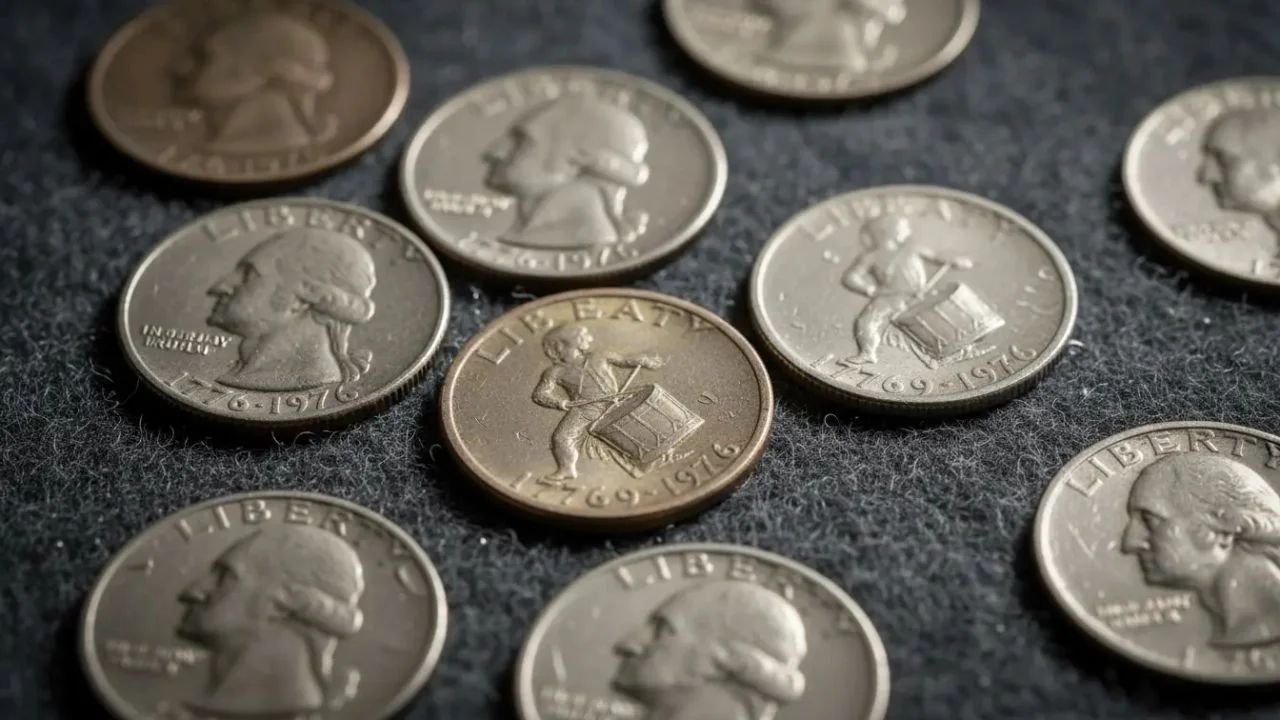
The 1976 Bicentennial quarter is one of the most recognizable modern U.S. coins, marked by its dual date “1776–1976” and the iconic colonial drummer reverse. While hundreds of millions were produced and most remain common, a very small number possess rare characteristics that elevate their value into six-figure territory. In exceptional cases, the right combination of error, composition, condition, and provenance can push a Bicentennial quarter’s value beyond $750,000.
Understanding what separates an everyday example from a museum-quality rarity is essential for collectors and investors alike.
Why Most Bicentennial Quarters Are Common
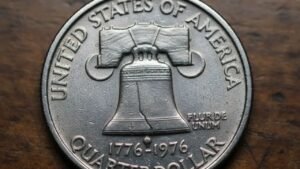
The U.S. Mint produced Bicentennial quarters in enormous quantities at Philadelphia, Denver, and San Francisco. These coins were widely circulated and saved in large numbers, which is why most examples today are worth little more than face value.
However, mass production also increases the chance of mistakes. When rare minting errors, experimental planchets, or exceptional preservation intersect, a common coin can transform into an elite collectible.
Key Value Drivers for Bicentennial Quarters
Several critical factors determine whether a Bicentennial quarter is ordinary or extraordinary.
Production errors are among the most powerful value drivers. Off-center strikes, broadstrikes, clipped planchets, and major die breaks were never intended to leave the mint, making surviving examples inherently scarce.
Composition errors are even more significant. While standard circulation quarters were struck in copper-nickel clad, some proofs were intentionally struck in silver. Coins accidentally struck on the wrong metal planchet, such as solid silver or bronze, can command extraordinary premiums.
Die varieties also contribute heavily to value. Doubled dies, unusual die alignments, and repunched elements create visually distinctive coins that attract serious collector demand.
Condition plays a decisive role. A rare variety in poor condition may be worth far less than a pristine example. Coins graded at the top of the scale often have populations of only one or two known pieces.
Provenance adds another layer of value. Coins with documented ownership histories, notable collectors, or appearances in major auctions often achieve higher prices due to their established credibility.
How to Spot a Bicentennial Quarter Worth Over $750,000
While finding such a coin is rare, careful inspection can help identify one with exceptional potential.
Check Composition and Weight
A standard Bicentennial quarter weighs approximately 5.67 grams. Any significant deviation from this weight should prompt further investigation. A heavier or lighter coin may indicate a wrong planchet strike.
Examine the edge closely. Copper-nickel clad quarters show visible layering, while silver planchets often appear uniform. An unusual color or metal sheen can be an important clue.
Inspect for Die Errors and Varieties
Use a 10x loupe or microscope to examine the design in detail. Look for strong doubling on the date, lettering, or design elements. True doubled dies show clear separation and depth, unlike flat machine doubling.
Check for unusual alignment or distorted elements that suggest die misalignment or hubbing errors. Clear, dramatic varieties are far more valuable than subtle anomalies.
Identify Major Minting Errors
Major errors are among the most valuable modern coin discoveries. Off-center strikes with a large portion of the design still visible are especially sought after. Clipped planchets that alter the coin’s shape can also command strong premiums.
Wrong planchet strikes are the most dramatic. A Bicentennial quarter struck on a silver or bronze blank is an elite rarity that can generate intense auction competition when authenticated.
Evaluate Condition and Grading Potential
Condition can multiply a coin’s value many times over. Look for sharp details, strong original luster, and clean surfaces free of scratches or wear. Coins that appear untouched since leaving the mint are prime candidates for professional grading.
High-grade examples certified as MS69, MS70, PR69, or PR70 are exceptionally rare. When combined with an error or variety, these grades can push values into extraordinary territory.
Verify Provenance and Documentation
Provenance can significantly enhance value. If a coin has documentation, old photographs, or auction records, preserve them carefully. Coins with a traceable history often attract higher bids due to increased buyer confidence.
Practical Inspection Checklist
Before making any decisions, follow a structured inspection process.
Photograph the coin in high resolution, capturing the obverse, reverse, and edge. Look for unusual weight, color, or strike characteristics. Compare your coin with verified examples in reputable references and auction archives. If uncertainty remains, consult an experienced dealer or numismatic specialist. For promising coins, professional third-party grading is essential.
A Real-World Discovery Example
In one documented case, a collector noticed a Bicentennial quarter with an unusual rim and a surface color that differed from standard clad coins. After careful photography and expert consultation, the coin was authenticated as a wrong planchet strike. Once graded and certified, it sold at auction for a substantial five-figure sum, far exceeding initial expectations.
This example illustrates how careful observation, patience, and professional verification can unlock hidden value.
When to Seek Professional Help
If a Bicentennial quarter shows multiple high-value indicators, such as a composition error, major minting anomaly, exceptional condition, or unique provenance, professional evaluation is essential.
Avoid cleaning or altering the coin in any way. Even minor surface changes can permanently destroy its value. Instead, focus on preservation, documentation, and authentication.
Final Thoughts on Rare Bicentennial Quarters
While the odds of finding a Bicentennial quarter worth over $750,000 are slim, they are not zero. Exceptional coins do exist, often discovered by collectors who take the time to look closely and ask the right questions.
With careful inspection, proper documentation, and expert guidance, a familiar coin from everyday history could turn out to be a remarkable financial and historical asset.