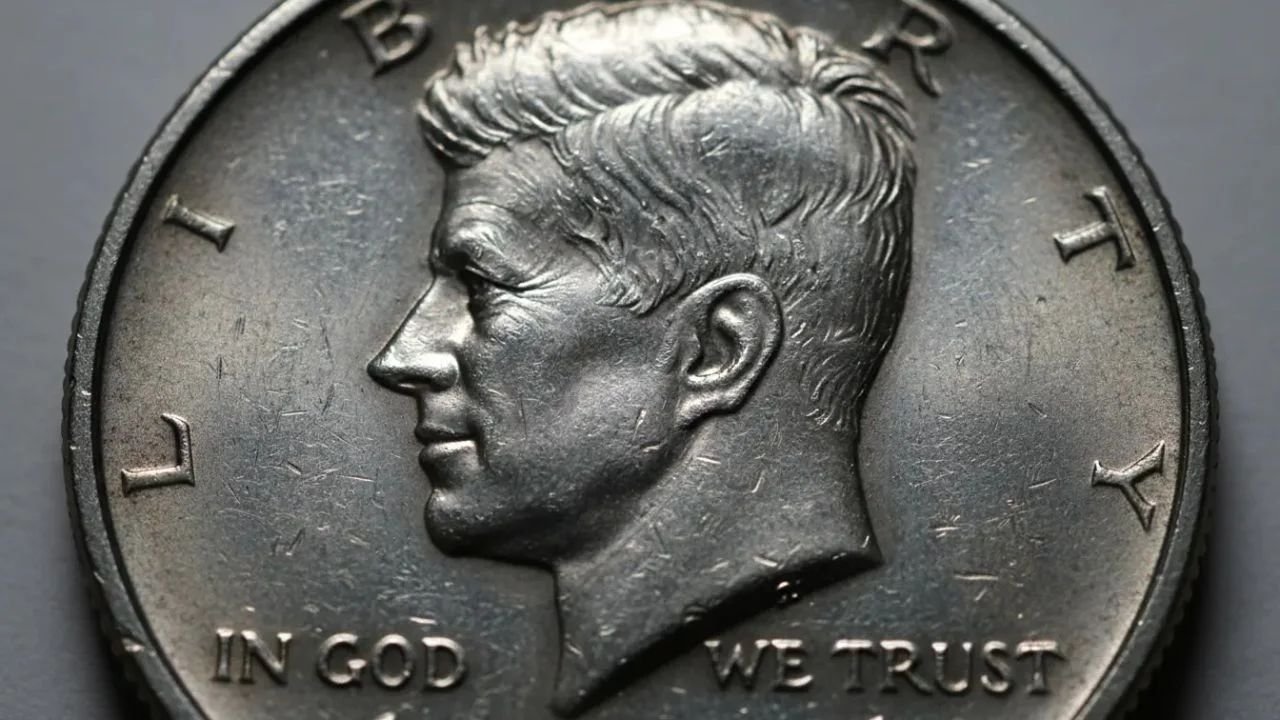
The Kennedy Half Dollar has been a fixture of American coinage since 1964, created in honor of President John F. Kennedy shortly after his assassination. While most examples remain modest in value, a tiny number of extraordinary coins have achieved legendary status. In rare circumstances involving unique mint errors, exceptional preservation, and verified provenance, values can soar into the multi-million-dollar range, with the most extreme examples rumored near $9.8 million. Identifying such a coin requires discipline, precision, and a methodical approach trusted by serious collectors.
Start With the Fundamentals: Confirm the Coin Is Genuine
Before hunting for rare errors or special varieties, establish that the coin meets official U.S. Mint specifications. This step eliminates the majority of altered or counterfeit pieces.
Standard Physical Specifications
A genuine Kennedy Half Dollar should measure 30.6 millimeters in diameter and feature a clean, evenly spaced reeded edge. Weight is equally critical. Both silver and copper-nickel versions weigh approximately 12.5 grams, with only slight tolerance for mint variation. Any significant deviation is an immediate warning sign.
Metal composition varies by year. Coins struck in 1964 contain 90 percent silver. Issues from 1965 through 1970 are composed of 40 percent silver bonded to a copper core. All later circulation strikes are copper-nickel clad. A mismatch between year and composition strongly suggests tampering or forgery.
Why Baseline Verification Matters
High-value Kennedy Half Dollars are among the most counterfeited modern U.S. coins. Many fakes fail basic tests long before advanced analysis is needed. Confirming weight, diameter, edge style, and composition protects you from wasting time and money on altered pieces and ensures that only legitimate candidates move to the next stage of evaluation.
Rare Features That Define Legendary Kennedy Half Dollars

Once authenticity is established, value is driven by a narrow set of traits that collectors aggressively pursue.
Date and Mint Mark Anomalies
Errors involving dates and mint marks can dramatically increase desirability. Look for doubled or distorted numerals, misplaced digits, or repunched mint marks. These anomalies originate during die preparation and cannot be replicated without leaving evidence of tampering.
Doubled Die Varieties
True doubled dies display clear, rounded doubling caused by misaligned hub impressions during die creation. On Kennedy Half Dollars, doubling may appear on “LIBERTY,” Kennedy’s hair, or “IN GOD WE TRUST.” Flat, shelf-like lines usually indicate machine doubling, which carries little to no premium.
Proof and Cameo Characteristics
Proof Kennedy Half Dollars were struck using polished dies for collectors. They exhibit mirror-like fields and sharply defined details. Deep cameo proofs, with strong contrast between frosted devices and mirrored backgrounds, are especially valuable in high grades. Exceptional proof examples often outperform circulation errors at auction.
Planchet and Strike Errors
Some of the most dramatic Kennedy Half Dollars owe their value to striking or planchet errors. Broadstrikes, clipped planchets, off-center strikes, and lamination flaws are all collectible. The more visible and well-preserved the error, the higher the potential value, especially when combined with silver composition or proof quality.
Essential Tools for Serious Inspection
Professional evaluation begins with proper equipment. A 10x loupe or microscope reveals fine details invisible to the naked eye. Digital calipers verify diameter accuracy, while a digital scale precise to 0.01 grams confirms weight. Reference databases from major grading services provide verified images and diagnostic markers for known varieties.
Never clean a coin during inspection. Even light cleaning permanently damages surfaces and can reduce value by thousands or more.
Authentication and Professional Grading
Any Kennedy Half Dollar suspected of high value should be authenticated by a respected third-party grading service.
The Certification Process
Start by photographing the obverse, reverse, and edge in high resolution. Document all anomalies clearly. Compare your coin against certified examples using trusted databases. If the coin still appears promising, submit it to a leading grading service such as PCGS or NGC.
For coins with unusual weight or suspected composition errors, non-destructive metallurgical testing may be used to confirm metal content. Once certified, the coin is encapsulated in a tamper-resistant holder and assigned an official grade.
Why Certification Is Critical
Third-party grading establishes authenticity, assigns a universally accepted condition grade, and provides confidence to buyers and auction houses. Coins claiming extreme value are rarely considered seriously without certification. In the high-end market, grading can be the difference between curiosity and a record-setting sale.
Detecting Common Forgeries and Alterations
Because of the high stakes, counterfeit Kennedy Half Dollars are common. Vigilance is essential.
Watch for tool marks around dates or mint marks, which may indicate added metal or engraving. Artificial toning, uneven coloration, or unusual surface texture often signals chemical treatment or plating. Under magnification, sanding lines or filled recesses are red flags.
Simple tests can help. Genuine Kennedy Half Dollars are non-magnetic. A magnet response indicates an incorrect metal core. Density tests using water displacement can also reveal composition inconsistencies without damaging the coin.
A Real-World Discovery Scenario
Collectors often underestimate where valuable coins can appear. In one documented case, a heavily toned Kennedy Half Dollar purchased inexpensively showed unusual doubling near the date. After careful documentation and comparison with verified examples, the coin was authenticated as a rare doubled die variety. Professional grading transformed a casual purchase into a major auction highlight, underscoring the importance of careful inspection and patience.
Final Checklist Before Claiming a Multi-Million-Dollar Coin
Confirm diameter, weight, and metal composition. Photograph all surfaces clearly. Compare anomalies with certified reference examples. Perform only non-destructive tests. Avoid cleaning or polishing. Submit the coin to a trusted grading service. Preserve documentation and provenance at every stage.
When to Seek Expert Guidance
If a coin displays multiple rare features or appears historically unique, consult a professional numismatist or major auction house before making public claims. Expert guidance protects both the coin and the collector from costly errors.
Identifying a legendary Kennedy Half Dollar is not about luck alone. It requires careful verification, informed observation, and professional authentication. By following a disciplined process, collectors give their discoveries the best chance to be recognized for what they truly are—extraordinary pieces of numismatic history with the potential for exceptional value.